Free Shipping worldwide on order above $100
Join our empowerment journey for artisan stories, new arrivals, and exclusive offers.
Warm clothing made from Himalayan sheep wool, hand-knitted stitch by stitch by artisans in Pokhara, Nepal. Gloves and convertible mittens, ribbed beanies, ankle socks, leg warmers, and knitted jackets- every piece made from wool grown on sheep that live high in the Nepali mountains. Everything here is free size and unisex, so there is no fit to work out. This is not knitwear bought in and relabelled. It is made in our own workshop by the people whose names are on it.
Eight pieces across four groups, organised by what you are trying to keep warm.
|
What it is |
From |
||
|
Hands |
Convertible mittens with a fold-back flap, and fingerless gloves with knitted flower embroidery |
$15 |
|
|
Head |
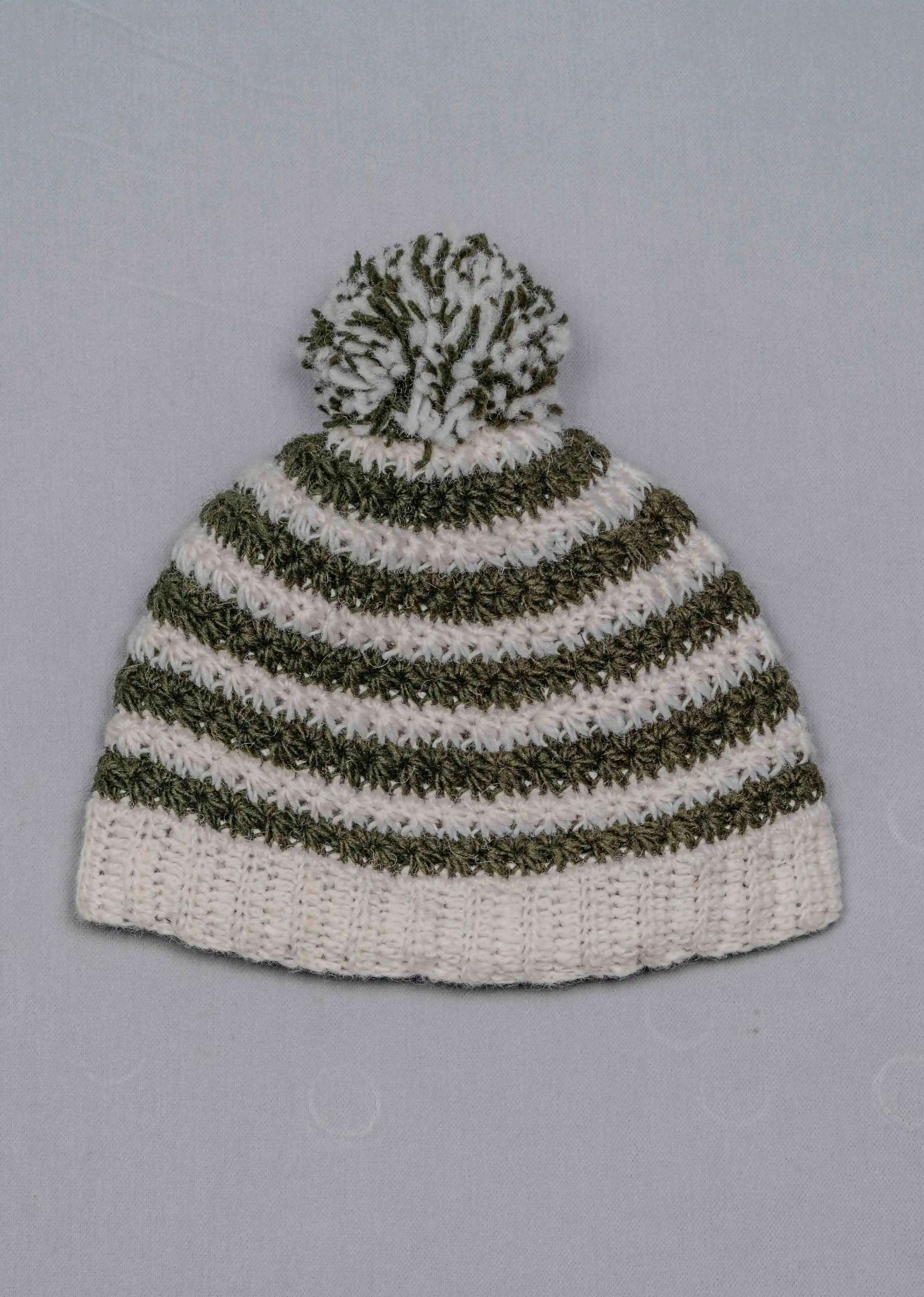
Classic rib-knit beanie, soft and stretchable, in green and yellow |
$20 |
|
|
Feet and legs |
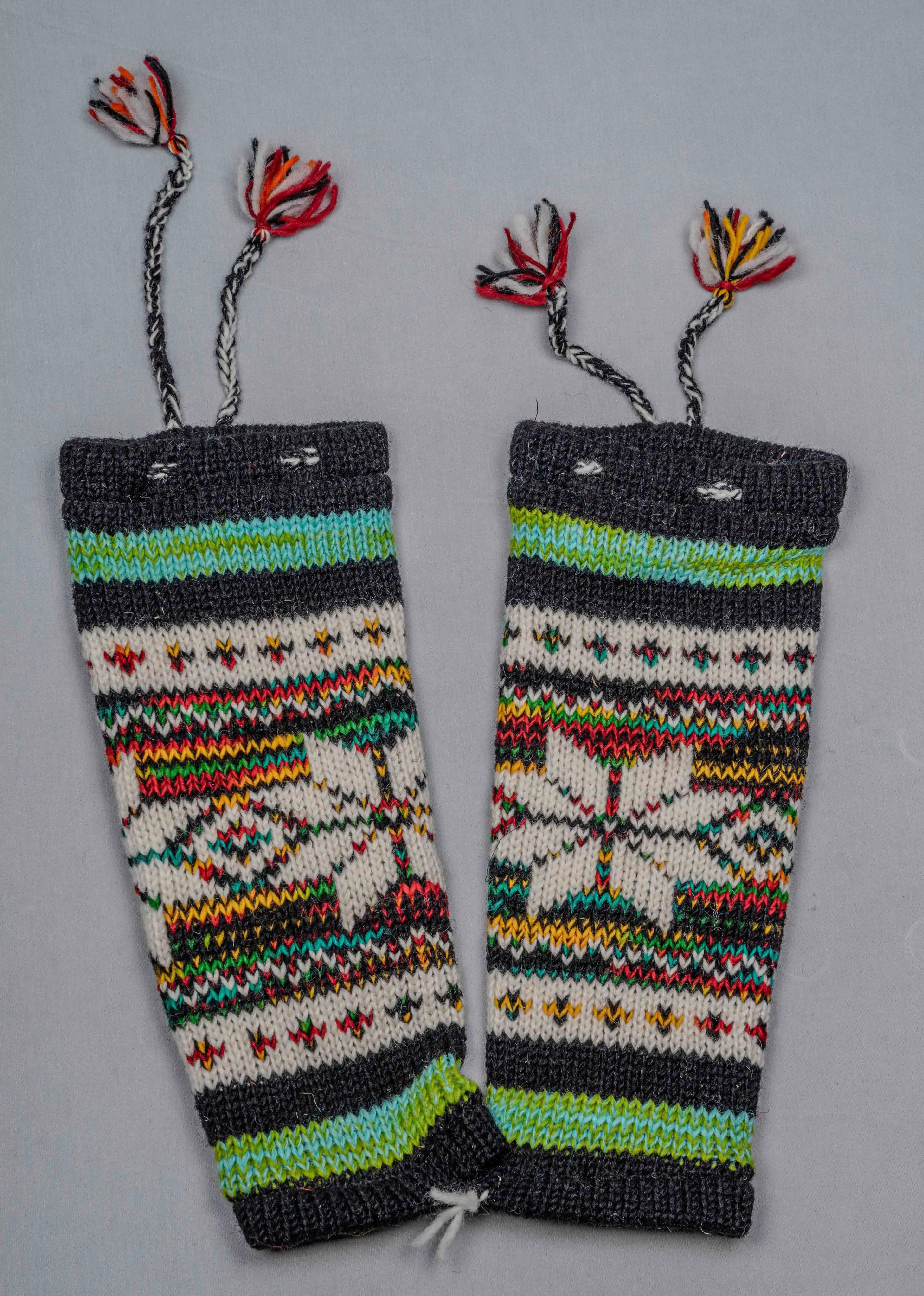
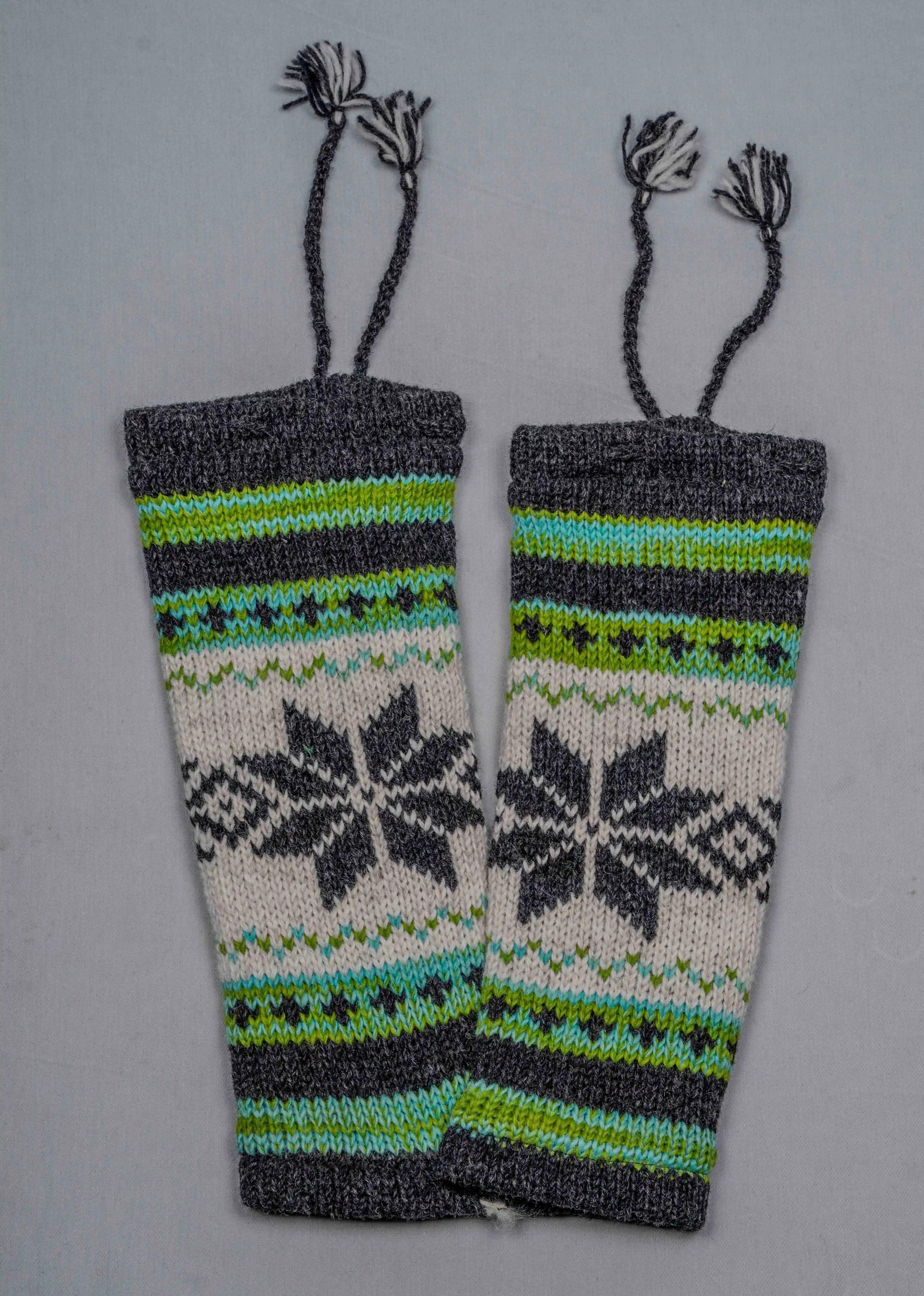
Ankle socks in green and dark red, and ribbed leg warmers |
$20 |
|
|
Body |
Three knitted jackets: multi-colour patchwork, rainbow stripe with a hood and zip, and a hooded knit |
$50 |
Sheep wool is not one material. What it feels like depends almost entirely on the animal and where it lived.
Nepali sheep live high. Four native breeds graze the middle hills and the high Himalayan pastures, and they do not all produce the same fibre:
|
Breed |
Fibre |
Micron |
Suited to |
|
Bhyanglung |
Fine, soft, high crimp |
20 to 25 |
Next-to-skin knitwear |
|
Lampuchhre |
Variable |
22 to 30 |
Mixed use |
|
Baruwal |
Coarse, durable |
25 to 35 |
Carpets, rugs, heavy blankets |
|
Kage |
Coarse |
28 to 38 |
Traditional outerwear, carpets |
We go into the whole journey, from the pasture to the finished garment, in our guide to sheep wool from Nepal.
Every piece on this page was knitted by hand. Not knitted by machine and finished by hand. Knitted, stitch by stitch, by one artisan.
You can see it if you look. A hand-knitted rib has small irregularities in tension that a machine cannot produce and would reject as faults. The patchwork jacket is assembled panel by panel, so no two are identical. The flower embroidery on the fingerless gloves is worked in after the knitting is done, by the same person.
There is a practical reason to care beyond the look. Hand-knitting produces a looser, more elastic fabric than machine knitting at the same yarn weight. It traps more air, which is what actually makes something warm, and it stretches to fit rather than pulling tight. That is why free size works here and would not work on a machine-knit garment.
It is slower. A pair of gloves takes an artisan the better part of a day, and a jacket takes several. That time is most of what you are paying for, and it goes to the person who did the work. More on the craft in our guide to hand-knitted woolen clothes.
We make both, and people ask this constantly, so here is the honest answer.
Cashmere is softer and lighter. It comes from the undercoat of the Chyangra goat, the fibre is finer, and a cashmere scarf will feel better against bare skin than a wool one. It is also several times the price.
Sheep wool is tougher and warmer for the money. It resists abrasion far better, which matters enormously for gloves, socks and anything that rubs. It handles damp better. And it costs a fraction as much.
The practical split most people land on: wool for the things that take a beating, meaning gloves, socks, leg warmers and outer layers. Cashmere for the things that touch your neck and face, meaning scarves, stoles and shawls. Buying a cashmere sock would be a waste of cashmere. Buying a wool scarf when your skin is sensitive would be a waste of a scarf.
Full comparison in our guide to cashmere versus sheep wool, or go straight to the cashmere collection.
Wool works by trapping air, not by being heavy. These are the actual weights, so you can judge for yourself:
Deep winter, outdoors. The convertible mittens and the beanie. Wool keeps insulating even when it picks up moisture, which is the property that separates it from cotton and from down. A cotton glove that gets damp in snow stops working. A wool one does not.
Cold houses. The socks and leg warmers. Most of what people call being cold indoors is cold feet and cold ankles, and these solve it more cheaply than heating a room.
Trekking and travel. Wool resists odour, so a pair of socks can go several days without washing. That is the reason wool has stayed the standard for hiking socks despite everything synthetic that has been invented since.
Shoulder seasons. The knitted jackets work as a mid-layer under a shell, or on their own on a cool evening. The hooded one has a zip, so it vents.
Every piece here is free size and unisex. That is a genuine property of hand-knitted wool, not a way of avoiding the cost of making sizes.
Hand-knitted fabric stretches and recovers. A rib-knit beanie fits a range of head sizes because the rib opens and closes. Leg warmers and ankle socks work the same way. Gloves are the most forgiving item of clothing there is, which is why nobody has ever asked for their glove size.
Where it matters most is gifting. You do not need anyone's measurements to buy them wool gloves, a beanie, or socks, and nothing here can arrive in the wrong size. The jackets are the one place to think about it: free size on a knitted jacket sits generously, closer to a relaxed fit than a tailored one.
Hand wash cold with a wool-safe detergent. Press the water out rather than wringing it, and dry flat, away from radiators and direct sun. Never tumble dry. Never hang a knitted piece up wet, because the weight of the water stretches it out of shape and it does not come back.
Wool cleans itself more than people expect. It resists odour naturally, so airing a beanie or a pair of gloves overnight is usually enough, and most pieces need washing only a couple of times a season.
Some pilling where things rub is normal on real wool and not a defect. A comb takes it off in a minute. Because this is not superwash treated, it will felt if you wash it hot, so keep the water cold, and you will not have a problem.
Yes Helping Hand has been a social enterprise since 2011, and we employ more than 180 artisans in Pokhara. Most are women. Many came to us shut out of other work: single mothers, differently abled artisans, and people from communities that get passed over for hiring.
Hand-knitting is skilled work that can be taught to someone who has never had a trade, and once learned, it pays year after year. That is the whole idea. The wool is bought from shepherds in the hills, so the money reaches two sets of people before it reaches us.
Our workshop in Pokhara is open to visitors. You can watch a jacket being knitted and meet the person knitting it. You can also read more about how we source and make our wool.