Preserve Cashmere With These Research and Experience-based Ideas
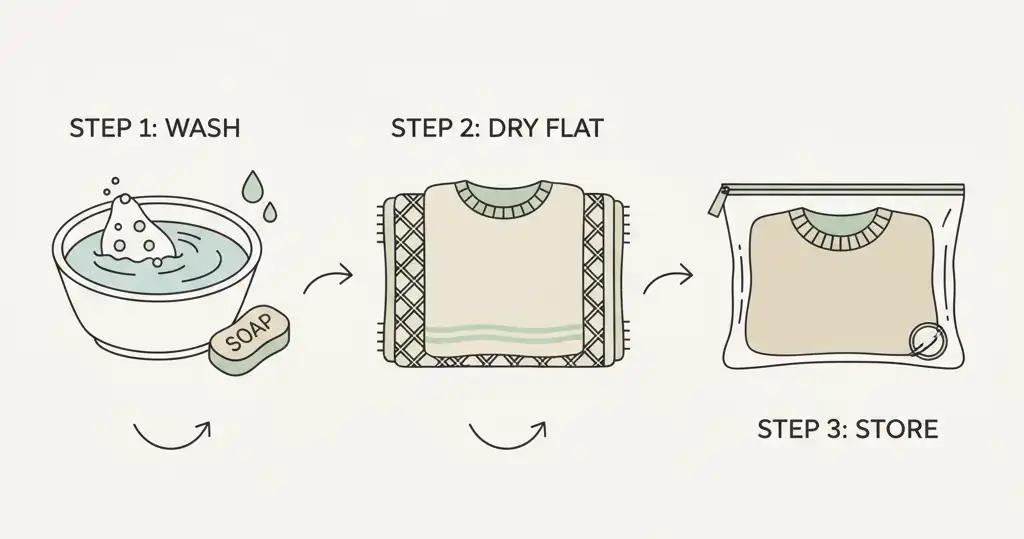
Built from fiber-level research and professional expertise. Bookmark this guide—your cashmere will look luxurious for a decade or more.
Quick Reference Summary
| Care Aspect | Key Guidelines |
| Between Wears | Rest garments 24–48 hours, Remove pills early with cashmere comb |
| Washing Temperature | Maximum 30°C (86°F) for most items, Scarves: Maximum 25°C (77°F) |
| Machine Settings | "Wool/Hand Wash" cycle, 600 RPM spin speed, Half-full drum capacity, Each item in a separate mesh bag |
| Detergent | Cashmere/wool-specific formulas only pH-balanced for protein fibers |
| Drying Method | Never wring or twistTowel-press to remove moisture, Flat-dry at room temperature, Avoid direct sun and heat sources |
| Storage | Always fold, never hangCool, dry, ventilated spaces, Cedar blocks + lavender for moth protection |
| Pilling Management | Normal occurrence, especially initially, Remove immediately for best results |
Why Cashmere Behaves Differently
Fiber Characteristics:
• Ultra-fine diameter: 12–19 micrometers (vs. typical wool at 22+ micrometers)
• Unique structure: Slightly hollow fibers that trap air effectively
• Exceptional warmth: Up to 8× warmer than regular wool at comparable weight
• Smooth cuticles: Lower-height scales create the signature softness
• Moisture capacity: Can absorb up to 30% of its weight in moisture without feeling wet
Key Vulnerability:
• Keratin protein structure becomes 50% weaker when wet
• Critical care factors: Heat + moisture + mechanical action = felting, shrinkage, distortion
What This Means for Care
| Factor | Impact | Care Response |
| Fine fibers | More delicate, prone to breakage | Gentle handling always |
| Protein structure | Weakens when wet | Minimal agitation during washing |
| Air-trapping ability | Maintains insulation properties | Preserve fiber structure |
| Smooth surface | Reduces natural grip between fibers | Support garment weight when wet |
Pilling Prevention and Management
Understanding the Pilling Process
Pilling is normal and follows a predictable pattern:
Prevention Strategies
• Choose quality pieces: Longer fibers (≥38mm) pill significantly less
• Rotate wearing schedule: Allow 24–48 hours rest between wears
• Minimize friction sources:
- Avoid rough bag straps and jewelry contact
- Don't layer under abrasive synthetic materials
- Be mindful of desk edges and rough surfaces
- Control static electricity: Maintain ambient humidity; avoid very dry, synthetic-heavy outfits
Early Intervention (When Fuzz Appears)
• Act immediately: Remove surface fuzz with cashmere comb or quality fabric shaver
• Use light pressure: Heavy-handed removal can damage fibers
• Target timing: Early removal prevents tangles from "anchoring" into permanent pills
After Pills Form
• De-pill first, then wash on gentle wool cycle to reset fiber surface
• For persistent issues: Consider professional enzyme or plasma anti-pilling treatments
• Monitor high-risk zones: Underarms, elbows, side seams, bag contact areas
High-Risk Pilling Zones
| Garment Type | Primary Risk Areas |
| Sweaters | Underarms, elbows, side seams |
| Cardigans | Button bands, pocket areas, cuffs |
| Scarves | Areas touching neck, bag straps |
| Shawls | Shoulder contact points, draping edges |
Washing Decision Framework
Three-Question Assessment
Question 1: Soil Level
• Light refresh needed?
• Body oils/deodorant present?
• Visible stains or odors?
Question 2: Construction & Size
• Knitted vs. woven construction?
• Individual garment vs. large blanket?
• Embellishments or delicate details?
Question 3: Available Equipment
• Machine with wool cycle available?
• Mesh laundry bags on hand?
• Adequate flat-drying space?
Care Method Selection
| Situation | Recommended Method | Alternative Options |
| Light refresh, no soil | Air overnight | Light steaming from distance, brief freezer deodorizing (in dry bag) |
| Normal soil levels | Machine wool cycle OR careful hand wash | Choose based on available equipment |
| Large/heavy items | Professional cleaning | At-home care only if properly equipped |
| Severe stains | Professional cleaning | Targeted pre-treatment + gentle wash |
| Uncertainty about method | Professional cleaning | When in doubt, seek expert care |
Hand Washing Technique
When to Choose Hand Washing
• Delicate scarves and stoles
• Embellished or beaded shawls
• When machine lacks proper wool cycle
• Personal preference for control
Step-by-Step Process
Preparation (5 minutes)
• Turn knitted items inside out
• Close all buttons and zippers on cardigans
• Use clean basin filled with water ≤30°C (scarves ≤25°C)
• Add cashmere/wool detergent according to label instructions (err on less)
Washing Phase (15 minutes maximum)
• Submerge gently and squeeze/press water through fibers for ~1 minute
• Soak period: Up to 15 minutes total—no aggressive swishing or twisting
• Remember: Wet fibers are significantly weaker
• Rinse thoroughly in similarly tempered water until completely clear
De-watering Process
• Lift with full support—never allow weight to stretch fibers
• Never wring or twist the garment
• Towel method: Lay on clean towel, roll, and press to transfer moisture
Washing Frequency Guidelines
| Garment Type | Recommended Frequency |
| Sweaters | Every 3–4 wears |
| Cardigans | Every 4–5 wears |
| Scarves/Stoles | Every 5–7 wears |
| Shawls | Every 3–5 wears |
| Blankets/Throws | Monthly or as needed (often professional) |
Machine Washing Guidelines
Why Machine Washing Can Be Superior
Modern machines with true Wool/Hand Wash programs often provide:
• More consistent temperature control
• Precise agitation levels
• Controlled spin speeds
• Less risk than heavy hand agitation
Optimal Machine Settings
| Setting | Specification | Why Important |
| Program | Wool/Hand Wash cycle only | Minimizes agitation |
| Temperature | ≤30°C (scarves ≤25°C) | Prevents protein damage |
| Spin Speed | ~600 RPM maximum | Reduces fiber stress |
| Load Size | Half-full drum | Allows proper movement |
| Protection | Each item in separate mesh bag | Prevents tangling/stretching |
Machine Washing Process
Pre-Wash Steps
• Close all fasteners (buttons, zippers)
• Turn knitted items inside out
• Place each item in its own mesh laundry bag
• Sort by weight and color for balanced loads
Washing Steps
• Use only cashmere/wool detergent
• Avoid enzyme-heavy or alkaline detergents
• Skip optical brighteners and fabric softeners
• Start cycle and monitor if possible
Post-Wash Steps
• Remove immediately when cycle completes Wash
• Towel-press to remove excess moisture
• Proceed directly to flat-drying process
What to Avoid
• Regular detergents (often too alkaline for protein fibers)
• Fabric softeners (can coat fibers and reduce breathability)
• Bleach or whitening agents
• Hot water or high-heat settings
• Tumble drying under any circumstances
Proper Drying Methods
The "Flat Drying" Rule
Never hang wet cashmere—water weight causes permanent stretching
Towel-Press Method
• First towel: Press (don't rub) to remove initial moisture
• Replace if needed: Use dry towel if first becomes saturated
• Multiple presses: Better than one aggressive session
Flat Drying Setup
• Surface: Clean towel or drying rack
• Location: Room temperature, shaded, well-ventilated area
• Shaping: Gently align seams, restore original dimensions, smooth edges
• Environment: No direct heat, sunlight, or radiators
Drying Environment Requirements
| Factor | Ideal Conditions | Avoid |
| Temperature | Room temperature (18-22°C) | Direct heat sources |
| Light | Indirect, ambient lighting | Direct sunlight |
| Air Flow | Good ventilation, gentle air movement | Stagnant air, forced hot air |
| Surface | Clean, flat, absorbent | Rough textures, uneven surfaces |
Post-Drying Wrinkle Treatment
• Minor wrinkles: Short, gentle steaming from several inches away
• Stubborn wrinkles: Low-heat pressing with protective cloth
• Never: Apply hot iron directly to cashmere fibers
Detergent and Water Considerations
Detergent Selection Criteria
Recommended Types
• Cashmere/wool-specific formulations
• pH-balanced for protein fibers
• Free from harsh enzymes
• No optical brighteners or bleaching agents
What to Avoid
• Regular laundry detergents (typically too alkaline)
• Chlorine bleach (damages protein structure)
• Fabric softeners (coat fibers, reduce breathability)
• High-enzyme formulations (can digest protein fibers)
Water Quality Considerations
| Water Type | Characteristics | Care Adjustments |
| Soft Water | Low mineral content | Use detergent as directed |
| Hard Water | High calcium/magnesium | May need wool-safe water softener |
| Very Hard Water | Excessive mineral buildup | Consider professional cleaning more frequently |
Special Additives
When to Use White Vinegar
• Targeted stain removal for protein-based stains
• Not recommended as a routine rinse additive
• Always dilute when using (1:10 ratio with water)
• Test first on inconspicuous area
Water Temperature Guidelines
• Consistency is key: Wash and rinse water should be similar temperature
• Avoid temperature shock: Sudden changes can cause fiber damage
• Cool is safer: When in doubt, err on the cooler side
Stain Removal Strategies
General Stain Removal Principles
• Act immediately for best results
• Always test treatment on an inconspicuous area first
• Blot, don't rub to avoid fiber damage
• Work from outside in to prevent spread
Stain-Specific Treatment Guide
| Stain Type | Immediate Action | Treatment Method | Scientific Basis |
| Tannins (wine, tea, coffee, berries) | Flush with cold water immediately | Cold water + mild detergent solution, blot and rinse repeatedly | Heat permanently sets tannins in protein fibers |
| Oils (food, cosmetics, body oils) | Lift excess without rubbing | Dab diluted dish soap on spot for 10–15 minutes, rinse cold, repeat if needed | Surfactants emulsify and lift lipids |
| Proteins (blood, sweat, dairy) | Rinse with cold water | Enzyme stain remover OR diluted white vinegar solution, soak ~10 minutes | Enzymes/acids break down protein bonds |
| Unknown/Aged Stains | Start with cold water | Mild detergent solution first, then reassess stain family for targeted treatment | Limit attempts to prevent fiber damage |
Critical Stain Removal Don'ts
• Never use hot water on tannin or oil stains
• Avoid scrubbing or aggressive rubbing motions
• No chlorine bleach or high-pH cleaning products
• Limit treatment attempts to two before seeking professional help
Emergency Stain Kit
• Cold water source
• Clean white cloths for blotting
• Mild cashmere detergent
• White vinegar (for protein stains)
• Gentle dish soap (for oil-based stains)
Storage and Moth Protection
Daily Storage Protocol
Immediate Post-Wear Care
• Air garments for 12–24 hours before storing
• Allow complete drying of any moisture from skin contact
• Check for stains and treat immediately if found
• Light brushing to remove surface lint and debris
Storage Method
• Always fold, never hang (prevents stretching)
• Use breathable locations - drawers, shelves with air circulation
• Keep environment cool, dry, and well-ventilated
• Avoid plastic bags for daily storage
Long-Term/Seasonal Storage
Pre-Storage Preparation
• Professional cleaning recommended before long-term storage
• Ensure complete dryness to prevent mildew
• Remove all stains (moths are attracted to body oils and food residues)
• Final inspection for any needed repairs
Storage Materials and Methods
| Storage Option | Best For | Advantages | Considerations |
| Cotton zip bags | Most garments | Breathable, protective | Ensure complete dryness first |
| Acid-free tissue | Delicate items, layering | Prevents creasing, pH neutral | Replace periodically |
| Cedar blocks/balls | All storage areas | Natural moth deterrent | Sand lightly to refresh oils |
| Lavender sachets | Supplementary protection | Pleasant scent, moth repellent | Replace annually |
Long-Term Storage Environment
• Temperature: Cool and stable (ideally 60-70°F)
• Humidity: Low but not arid (45-55% relative humidity)
• Light: Dark or very low light conditions
• Air circulation: Adequate ventilation to prevent mustiness
Moth Prevention Strategy
Understanding the Threat
• Moths target: Protein fibers, especially those with body oils
• Peak seasons: Spring and early summer for laying eggs
• Vulnerable areas: Dark, undisturbed storage spaces
Multi-Layer Protection Approach
• Cleanliness first: Always store clean garments
• Natural repellents: Cedar, lavender, rosemary
• Physical barriers: Sealed, breathable containers
• Regular monitoring: Check stored items every 3-6 months
• Environmental control: Keep storage areas clean and well-ventilated
Product-Specific Care Instructions
Sweaters (Highest Risk for Pilling and Wear)
Care Specifications
• Washing frequency: Every 3–4 wears
• Temperature limit: ≤30°C maximum
• Pre-wash prep: Turn inside out, de-pill before washing
• Drying focus: Carefully reshape body and sleeves, align shoulder seams
High-Attention Zones
• Underarm areas (high friction from arm movement)
• Elbow regions (contact with surfaces)
• Side seams (body movement stress)
• Cuff areas (watch and bracelet contact)
Cardigans (Button Stress and Panel Alignment)
Care Specifications
• Washing frequency: Every 4–5 wears
• Temperature limit: ≤30°C maximum
• Critical step: Always button completely for washing, drying, and storage
• Focus areas: Buttonhole reinforcement, pocket edges
Special Considerations
• Button strain: Avoid over-stretching buttonholes
• Panel alignment: Proper buttoning maintains shape
• Edge care: Pay attention to front borders and pocket stress points
Scarves (Most Delicate Handling Required)
Care Specifications
• Washing frequency: Every 5–7 wears
• Temperature limit: ≤25°C (most conservative)
• Handling method: Support full length during all wet handling
• Edge inspection: Check carefully for snags or pulls
Storage and Daily Care
• Fold loosely in a breathable storage bag
• Avoid contact with rough bag straps, jewelry, or zippers
• Gentle brushing to maintain surface appearance
Shawls (Large Surface Area Management)
Care Specifications
• Washing frequency: Every 3–5 wears
• Temperature limit: ≤30°C maximum
• Pre-wash inspection: Check borders and any fringe details
• Drying requirement: Ensure adequate large, flat drying area
Storage Method
• Fold lengthwise with acid-free tissue between layers
• Avoid sharp creases that could weaken fibers over time
• Support weight when moving to prevent stretching
Stoles (Length and Weight Distribution)
Care Specifications
• Washing frequency: Every 5–7 wears
• Temperature limit: ≤30°C maximum
• Handling technique: Support at multiple points to prevent lengthwise stretching
• Storage method: Roll with tissue or fold carefully
Special Handling
• Weight consideration: Long items can stretch under their own weight when wet
• Support points: Never lift from just one end
• Drying layout: May require diagonal placement on large flat surface
Blankets and Throws (Size-Dependent Methods)
Care Specifications
• Professional cleaning often recommended for large pieces
• Washing frequency: Monthly or as needed
• Between-wash care: Regular airing and gentle vacuuming with upholstery tool
• Use rotation: Alternate contact areas to distribute wear
Home Care Limitations
• Wet weight challenge: Large blankets can overwhelm home washing equipment
• Drying space requirements: Need substantial flat-drying area
• Alternative method: Targeted spot-cleaning between professional cleanings
Troubleshooting Common Issues
Size and Shape Problems
Minor Shrinkage Recovery
• Re-soak in cool water with wool conditioner
• Gently stretch back to original shape while damp
• Pin to correct dimensions if necessary
• Flat-dry with periodic reshaping
• Expect partial recovery - prevention is better than cure
Loss of Shape/Stretching
• Wet reshaping: Dampen and gently reshape to original dimensions
• Support while drying: Use towels to maintain shape
• Professional blocking: For valuable pieces, consider expert reshaping
Texture and Feel Issues
Stiff or "Boardy" Handfeel
• Likely cause: Detergent residue buildup
• Solution: Additional rinse cycle in cool water
• Prevention: Use less detergent, ensure thorough rinsing
Loss of Softness
• Possible causes: Wrong detergent, excessive heat, over-agitation
• Recovery method: Gentle conditioner treatment designed for wool
• Future prevention: Strict adherence to care guidelines
Pilling Problems
Persistent Pilling After Multiple Cycles
• Assessment: Check for high-friction contact points
• Environmental factors: Bag straps, desk edges, jewelry
• Solution: More frequent de-pilling, consider professional anti-pilling treatment
• Fiber quality: Very short fibers may continue to pill regardless of care
Odor and Storage Issues
Musty Storage Odor
• Immediate action: Air in shaded area with good ventilation
• Treatment: Brief, gentle steaming from distance
• Prevention: Fresh cedar blocks and lavender sachets
• Storage improvement: Better ventilation in storage area
New Garment Surface Fuzz
• Normal occurrence: Loose fiber ends from manufacturing
• Treatment: Light combing after first few wears
• Expectation: Should diminish significantly after initial removal
Seasonal and Travel Care
Seasonal Considerations
Wet Weather Season
• Preparation: Carry spare tote bag for protection
• Emergency care: If soaked, press in towel immediately, then flat-dry
• Prevention: Water-repellent sprays designed for wool (test first)
Dry Climate Challenges
• Static electricity: Add slight humidity to room environment
• Clothing combinations: Avoid pairing with clingy synthetic materials
• Skin contact: Dry skin can increase friction and pilling
Wardrobe Rotation Strategy
• Rest periods: Allow 24–48 hours between wears
• Benefits: Reduces pilling, allows fiber recovery, maintains shape
• Planning: Rotate between multiple pieces for best longevity
Travel Care Essentials
Packing Strategy
• Method: Always fold with acid-free tissue
• Protection: Use breathable garment bags
• Compression: Avoid over-packing that creates permanent creases
Travel Emergency Kit
• Small cashmere comb: For immediate pilling removal
• Travel wool detergent sheets: For emergency washing
• Stain removal pen: Wool-safe formulation
• Plastic bags: For wet/stained items (temporary use only)
Hotel Room Care
• Drying space: Identify flat surfaces before washing
• Temperature control: Ensure no direct heat sources
• Ventilation: Open windows or use bathroom fan for air circulation
Frequently Asked Questions
Washing and Drying
Q: Can I ever use a tumble dryer, even on low heat?
A: Absolutely not. Any combination of heat and mechanical motion will cause felting and shrinkage in cashmere. Air drying is the only safe method.
Q: Why is machine washing sometimes safer than hand washing?
A: Modern machines with proper wool cycles provide precise temperature control, minimal agitation, and controlled spin speeds. Heavy-handed manual agitation often causes more damage than a properly programmed machine cycle.
Q: How do I know if my machine's wool cycle is actually gentle enough?
A: Look for cycles that specify low agitation, cool temperatures (30°C or less), and slow spin speeds (600 RPM or less). Test with a less valuable piece first.
Quality and Expectations
Q: My new expensive cashmere sweater pilled after one wear—did I buy poor quality?
A: Early pilling is common even in high-quality cashmere. It's caused by loose surface fibers from manufacturing. Remove pills promptly, and they should stabilize after initial wear.
Q: How can I tell if cashmere is good quality before buying?
A: Look for longer fiber length (less pilling), consistent coloring, tight but not stiff knit, and minimal shedding when lightly brushed. Reputable brands typically provide fiber source and processing information.
Products and Additives
Q: Do I need special fabric softener for cashmere?
A: No. Fabric softeners can coat fibers, reducing their natural breathability and affecting the characteristic handfeel of cashmere.
Q: Is it safe to use vinegar as a rinse aid?
A: Only for targeted stain treatment. Regular vinegar rinses aren't necessary and can potentially affect fiber integrity over time.
Storage and Handling
Q: Can I hang cashmere to "air out" briefly?
A: Only when completely dry and supported at multiple points (shoulders and hem). Never hang wet cashmere, and minimize hanging time even when dry.
Q: Why fold instead of hanging for storage?
A: Hanging can cause stretching over time, especially at the shoulders. Folding distributes weight evenly and maintains the garment's shape.
Performance and Properties
Q: How much warmer is cashmere compared to regular wool?
A: Research indicates cashmere can provide up to 8 times better warmth-to-weight ratio compared to conventional wool, due to its fine fiber diameter and air-trapping structure.
Q: Why does my cashmere feel different after washing?
A: Proper washing should maintain the original handfeel. Changes usually indicate wrong detergent, excessive agitation, or heat exposure. Following proper care techniques preserves the fiber characteristics.
Professional Care Toolkit
Essential Equipment
• Cashmere comb or high-quality fabric shaver
• Mesh laundry bags (one item per bag)
• pH-balanced wool/cashmere detergent
• Clean white towels for press-drying
• Breathable storage bags
• Cedar blocks and lavender sachets
When to Seek Professional Help
• Large items like blankets and throws
• Severe stains that resist home treatment
• Vintage or heirloom pieces
• Garments with complex construction or embellishments
• When unsure about proper care method
Final Recommendations
Cashmere's extraordinary properties stem from its unique micro-architecture—ultra-fine fibers that create unparalleled warmth and softness. The key to preserving these characteristics lies in understanding and respecting the fiber's needs:
• Low heat prevents protein damage
• Low friction reduces pilling and wear
• Proper support maintains shape and structure
• Gentle handling preserves fiber integrity
By following these science-based care principles, your cashmere investment will provide years of luxurious comfort and elegant appearance.
This guide represents current best practices based on fiber science and professional textile care expertise. Always defer to manufacturer-specific care instructions when they differ from general guidelines.