Farm to Closet: Luxury Himalayan Cashmere Wool Through Yes Helping Hand
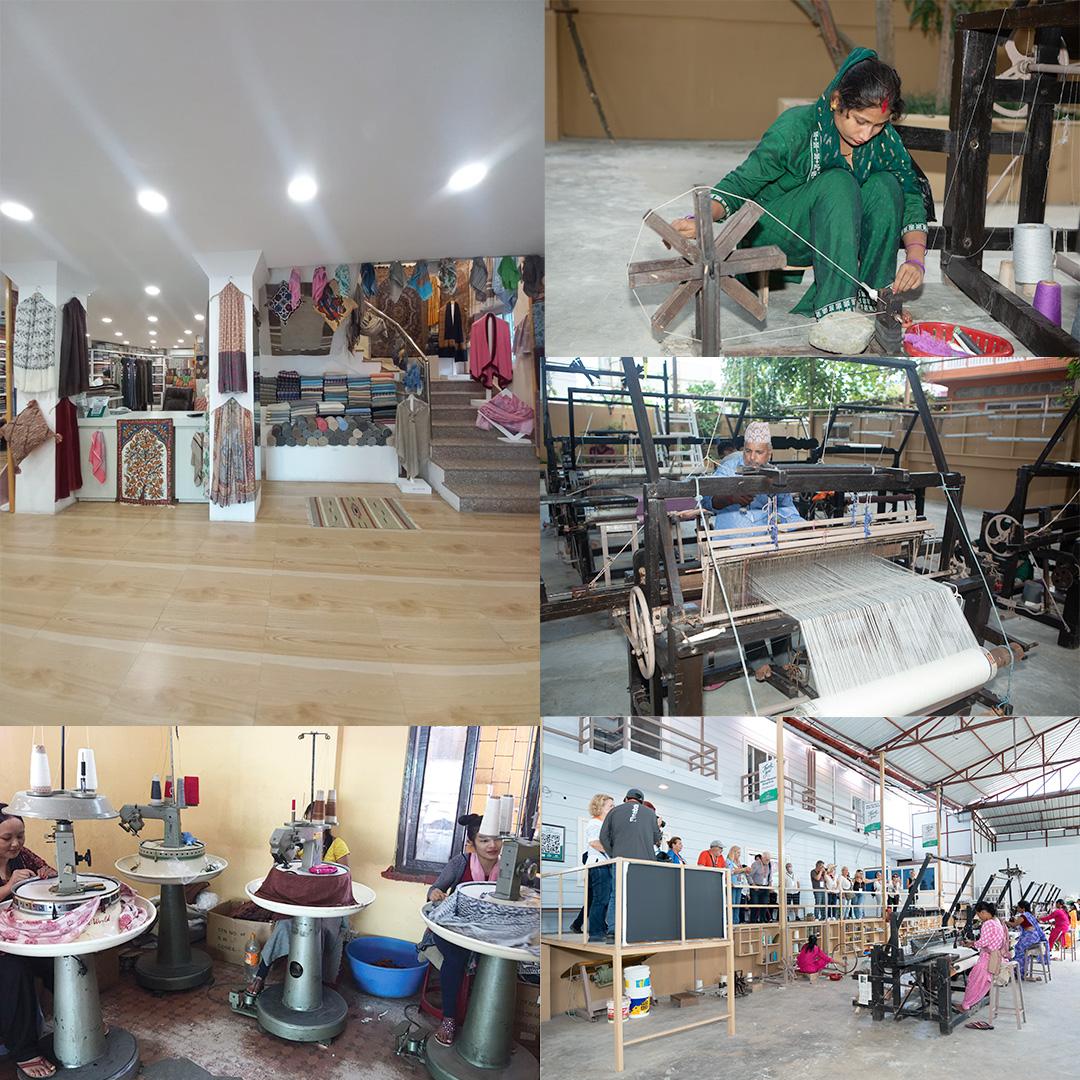
The clothes we wear tell stories. Some are made in factories where machines run day and night. But other clothes carry different stories, stories that start in the mountains, pass through the hands of skilled artisans, and arrive at you with purpose woven into every fiber.
This is how wool travels from the high Himalayas farms to your closet through Yes Helping Hand.
Where It Begins: The Himalayan mountains of Nepal
This is where the story of Yes Helping Hand begins. In the remote, rugged areas of Upper Mustang and Dolpa, at heights above 3,800 meters, these mountain communities are where our fiber journey begins. Here, a mountain goat called Chyangra lives among cold winds and dramatic mountain views. These areas are along Nepal’s border with Tibet, where the air is thin, the weather is harsh, and nature produces something truly special.
To survive winters when temperatures drop far below freezing, they grow two layers of coat. The outer layer is thick and rough, protecting them from cold wind and rain. The inner layer, hidden underneath, is very soft and fine, this is the precious fiber that becomes the cashmere and pashmina we treasure.
These goats are our source, the start of every product we make. They graze on high mountain pastures where only hardy plants grow. These mountainous communities rely on these animals for survival.
When we say “farm to closet,” we mean it truly starts here, in these mountains. Yes Helping Hand works directly with these herders, making sure that the journey from this Himalayan farm to your home is fair, ethical, and sustainable every step of the way.
Collecting the Wool: Once a Year, With Care
Wool collection happens once annually, during the transition from winter to spring. This timing is natural. As the weather warms, Chyangra goats naturally shed their soft undercoat. Herders gently comb or gather this fiber, a process that does not harm the animals.
The process harms no animal. Each Chyangra produces only a limited quantity of usable per year. This scarcity is one reason cashmere remains precious. But because we work directly with the herders, without middlemen, that makes our cashmere products remain high-quality and affordable. We are ensuring fair compensation reaches the people who care for these animals year-round. This direct relationship means herders receive proper value for their work instead of selling to middlemen at reduced prices.
Preparing the Wool: Cleaning and Carding
Freshly collected wool comes with natural oils and bits of dirt from the mountains. It needs careful cleaning before it can become yarn.
The wool goes into warm water baths mixed with gentle, natural soaps. Workers in the local communities wash it carefully, gently shaking the water enough to release dirt but not so roughly that fibers get damaged or tangled. Multiple rinses follow until the water runs clear.
After washing, the wool looks lighter in color and feels softer. Once dried, the wool still looks disorganized, fibers go in all directions, tangled and uneven. This is where carding happens. Workers pass the wool through using hand carders, which are flat paddles covered in fine wire teeth. As the wool moves between these surfaces, the teeth gently pull fibers into alignment. Tangled clumps separate. Any remaining vegetable matter falls away. The result is a web of wool where all fibers run parallel.
After the wool is collected, cleaned, and carded in the mountain communities, we bring it to our Yes Helping Hand workshop in Pokhara.
Spinning: Twist Becomes Strength
At Yes Helping Hand, this step happens by hand, performed by the people at the heart of our mission: physically challenged individuals, single mothers, and members of marginalized communities.
Using traditional spinning wheels, artisans draw out small amounts of fiber from the roving while the wheel turns. This twisting motion locks the fibers together. The amount of twist determines the yarn's characteristics; more twist creates stronger, firmer yarn; less twist keeps it soft and lofty.
Hand spinning creates yarn with subtle variations in thickness that give handmade fabrics their distinctive character. Each spinner develops their own rhythm and tension, leaving an individual signature in their work. This is skilled labor that requires training, focus, and time. Yes Helping Hand provides this training, teaching people who face barriers to employment the craft of turning fiber into yarn.
Creating Fabric: Two Different Paths
Now comes the transformation from yarn to fabric. This happens through either weaving or knitting, depending on what product is being made.
Weaving
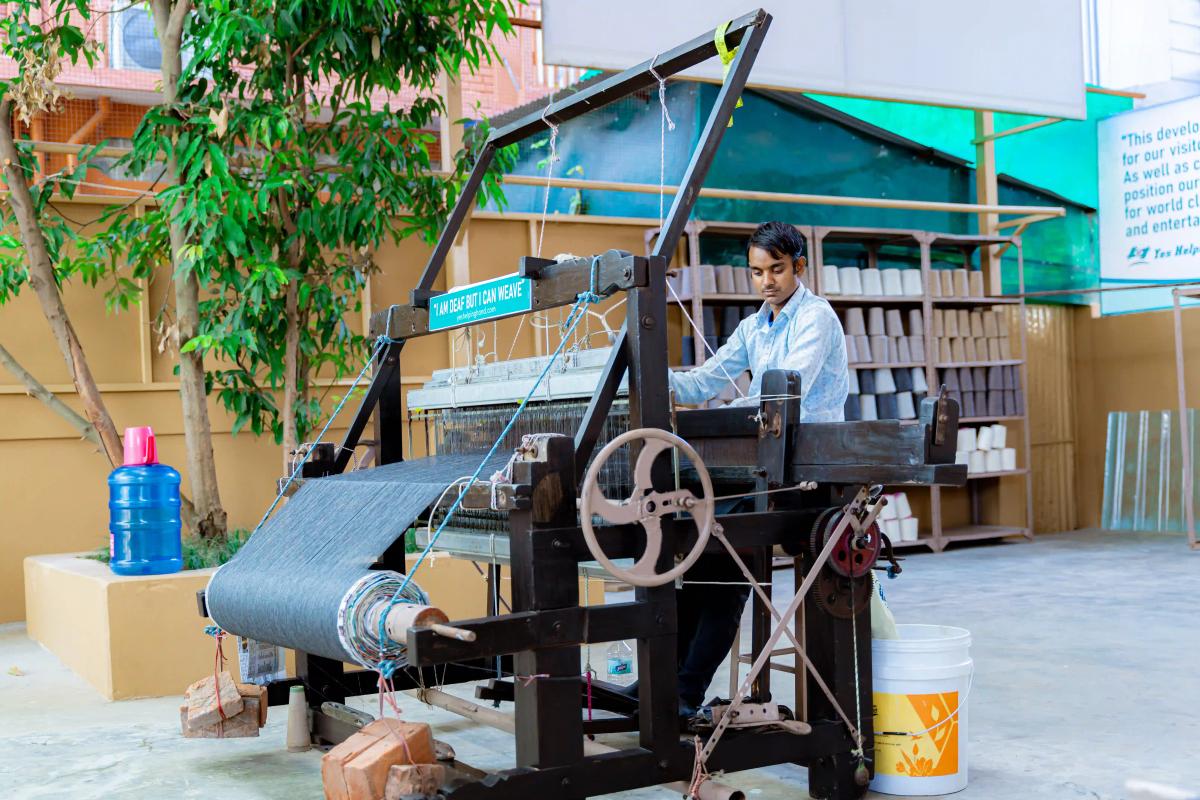
For woven items like shawls, scarves, and some blankets, yarn goes onto a loom. The loom is a frame that holds one set of threads (the warp) stretched tight and parallel. These warp threads run the length of the fabric.
We use traditional handlooms that require the weaver to operate multiple parts: foot pedals that lift different sets of warp threads, a shuttle that carries the weft thread across, and a beater that packs each new row firmly against the last. This coordination takes skill and creates fabrics with subtle irregularities that machines cannot replicate.
Knitting
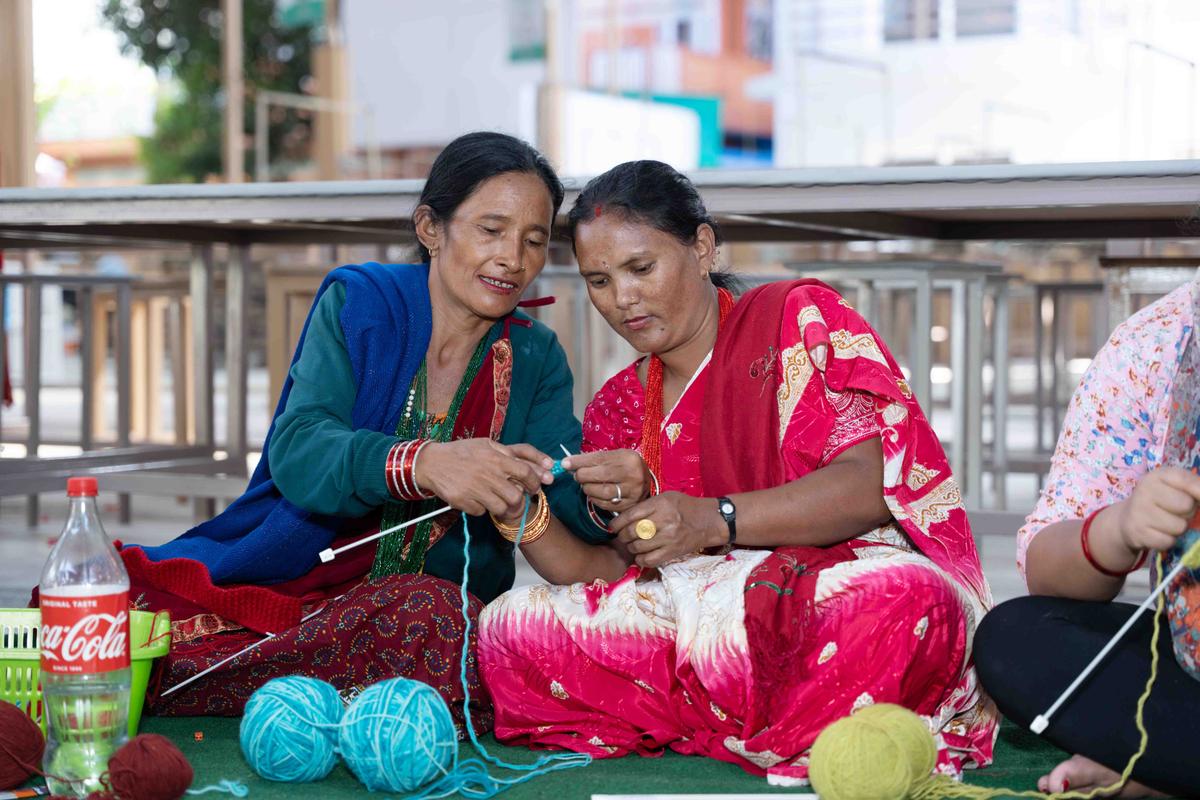
For products like sweaters, hats, gloves, and socks, knitting is the method. Knitting uses needles to create interlocking loops of yarn. Each new loop pulls through the previous one, building rows that form stretchy, flexible fabric.
Knitted fabrics have natural stretch, making them comfortable for clothing worn close to the body.
Finishing Touches: Quality Before It Reaches You
Before any product leaves the workshop, it goes through final steps to ensure quality.
Inspection and Mending
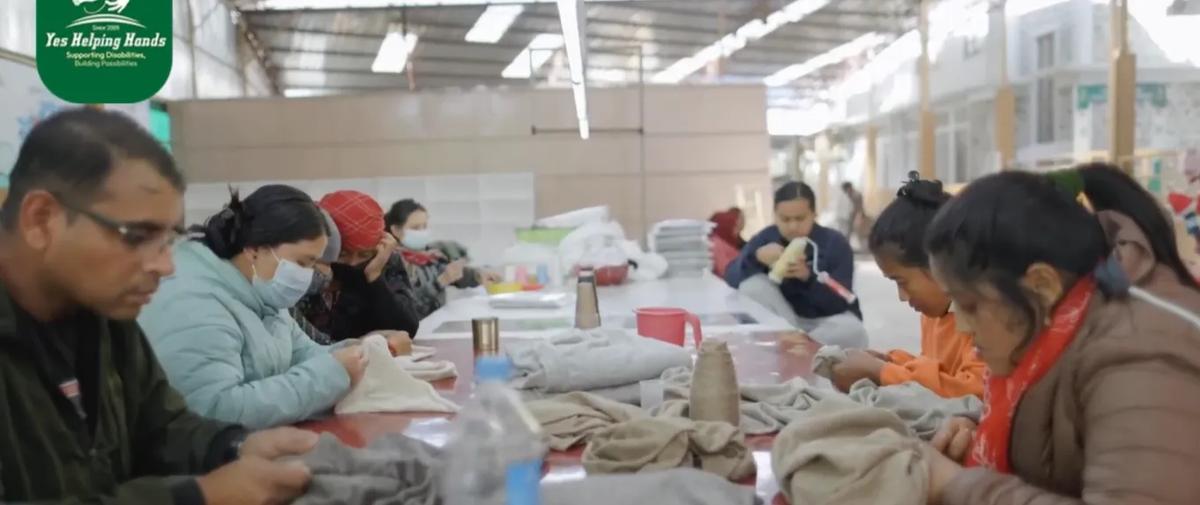
Workers examine every garment carefully, checking seams, looking for loose threads, and testing buttons or closures. If any small flaw is found, it is repaired immediately. Nothing is packed and sent out until it meets quality standards.
Pressing and Shaping
Garments are pressed with heat and steam to remove wrinkles and give them proper shape. Collars are pressed flat, seams are opened and flattened, and hems are crisped. This pressing makes the garment look polished and professional.
Embroidery (For Special Pieces)
Some products receive hand-embroidered details, traditional patterns, decorative borders, or artistic motifs. This embroidery is done by skilled needleworkers who follow traditional Nepalese designs or create contemporary patterns. These embellished pieces become one-of-a-kind items, carrying extra hours of handwork.
The Products: What This Process Creates
This farm-to-closet journey produces a range of Cashmere items, all following the same careful process:
- Cashmere Shawls and scarves
- Cashmere sweaters, cardigans, and pullovers
- Cashmere Jackets and outerwear
- Wool Hats, gloves, and socks
- Cashmere Blankets and throws
What You're Actually Wearing
When choosing cashmere from Yes Helping Hand, you're wearing:
- Wool from Chyangra goats living at 3,800 m above sea level.
- Fiber that was carefully collected without harming animals.
- Yarn that was hand-spun by trained artisans.
- Fabric that was woven or knitted with skill and attention.
- A garment that was sewn, inspected, and finished by people who take pride in their work.
- Support for specially-abled individuals, single mothers, and marginal communities.
- The result of fair wages paid to herders, spinners, weavers, and sewers.
- A product made with natural, sustainable materials and process.
This is the farm-to-closet connection. Not just knowing where something came from, but understanding the journey it took and the people who made that journey possible. When you wear Yes Helping Hand, you wear that entire story.